Showing posts with label Anglican Communion. Show all posts

Tuesday, February 26, 2019

An Appeal to Justin Welby

27 February 2019


The Most Reverend and Right Honourable Justin Welby
The Lord Archbishop of Canterbury
Primate of All England
Lambeth Palace, London, SE1 7JU

Your Grace:

Many of us in the Episcopal Church first greeted the news of the upcoming Lambeth Conference with great excitement. When I was in England this past summer and visited Canterbury for the first time, I was deeply moved by the palpable bonds of kinship and affection created by our shared belonging to the Anglican Communion. I felt incredibly proud and connected. It was with great sadness and distress, therefore, that I read the recent statement from Dr. Josiah Idowu-Fearon, Secretary-General of the Anglican Communion, announcing that same-sex spouses of active bishops would not be invited to attend the 2020 Lambeth Conference along with opposite-sex spouses.

I am, of course, keenly aware that not all Anglicans are of the same mind on issues of human sexuality, as well as a wide range of other issues. We are living in an age, however, in which the Church stands largely discredited among the people to whom we are called to bring the Gospel of Jesus Christ. Having often found ourselves on the wrong side of history, the Church has developed a reputation for being prejudiced, retrograde, and oppressive, a reputation that, I fear, is well justified. How are we to look people in the eye and say that our God is a God of love, and the Bible is the divinely inspired container of God’s loving Word, when the leaders of the Anglican Communion countenance and perpetuate the homophobia and discrimination that hurts so many LGBTQ members of our Christian family? How are we to defend the Church against the legitimate claims of outmoded and pharisaical legalism?

I know that you, like I, take seriously St. Paul’s affirmation in his Epistle to the Galatians (Gal. 3:28-29) that “there is no longer Jew or Greek, there is no longer slave or free, there is no longer male and female; for all of you are one in Christ Jesus. And if you belong to Christ, then you are Abraham’s offspring, heirs according to the promise.” Are LGBTQ people not also heirs of Christ’s promise, Your Grace? I came to the Episcopal Church in 2004 after having wandered for twenty years in a spiritual wilderness following a traumatic departure from the Judaism of my upbringing. I fell in love with the Anglican form of Christianity, because I witnessed in Holy Scripture and experienced in the embodied life of the Church a Jesus who loved and fully included the poor, the marginalized, and the rejected without any qualification and in defiance of the religious and civil authorities of his time. And I fell so in love with Jesus that I have dedicated my life to him as a priest.

The Sunday lectionary recently included the Sermon on the Plain from the Gospel of Luke, in which Our Lord says, “blessed are you when people hate you, and when they exclude you, revile you, and defame you on account of the Son of Man. Rejoice in that day and leap for joy, for surely your reward is great in heaven; for that is what their ancestors did to the prophets” (Lk 6:22-23). Our Lord did not judge us worthy of being hated, excluded, or reviled. Must we wait for heaven to see our Lord’s promise of inclusion fulfilled? Are we to be bullied, as the prophets were, by people who are ignorant and frightened by the ongoing revelation of God’s truth, as Our Lord said in the Gospel of John:

“I still have many things to say to you, but you cannot bear them now. When the Spirit of truth comes, he will guide you into all the truth; for he will not speak on his own, but will speak whatever he hears, and he will declare to you the things that are to come” (John 16:12-13).

God is speaking to the world; but many do not want to listen. As the spiritual head of the world’s 85 million Anglicans and Episcopalians, Your Grace, please guide me: what am I to tell my flock? When the chips are down, and we have to choose what is just and what is expedient, how am I supposed to defend the Anglican Communion? Must I tell my LGBTQ folks that Cantuar believes them to be expendable, or will I be able to say with pride that you and other Anglican leaders stood up for them? I hold out the deepest hope that you will take a courageous stand and echo the resolute words of the Most Rev’d Edmond Lee Browning, 24th Presiding Bishop and Primate of the Episcopal Church, who said “I want to be very clear – this church of ours is open to all – there will be no outcasts – the convictions and hopes of all will be honored.”

I have great compassion for the very difficult situation in which your find yourself, Your Grace, in trying to keep the Anglican Communion together, as did your predecessors in office. I will pray for you in love for the formidable vocation which has been entrusted to you, as I hope you will pray and advocate for all those who have been materially harmed by the Church’s exclusionary policies. With this in mind, I implore you to consider adopting the fairer and more equitable policy of inviting no spouses of active bishops to the Lambeth Conference, if you do not feel you can invite the same-sex spouses. This would at least mitigate the sting of our continued exclusion from full membership in the Church at the highest levels. It would remind me and others of why we are still proud to be Anglicans.

I thank you, Your Grace, for your consideration of my comments. I wish you and all of our family in the Church of England and the Anglican Communion a transformative Lent.

Your humble servant in Christ,

The Rev’d Ethan Alexander Jewett, SCP
VIII Rector, St. Helena’s Episcopal Church, Burr Ridge, Illinois
Episcopal Diocese of Chicago
The Episcopal Church

Saturday, January 16, 2016

Statement on the Primates' Meeting in Canterbury

My dear brothers and sisters,

The recent news from the Primates' Meeting in Canterbury has generated a lot of controversy, debate, and hurt feelings in the Episcopal Church, particularly among lesbian, gay, bisexual, transgender and other queer people, as well as their heterosexual allies. The resolution by the primates to exclude the Episcopal Church from the governing bodies and activities of the Anglican Communion for three years appears to many a punitive, disciplinary measure designed to pressure the Episcopal Church to retreat from its support of marriage equality by extending marriage rites to same-sex couples.

A number of parishioners have expressed their disappointment and distress to me, and have asked me to offer my perspective. Let me begin by assuring you that I share your feelings of sadness, and perhaps even anger, that the primates have taken this approach to resolving differing views around human sexuality. It does not seem to cohere with what St. Paul tells us in 1 Corinthians, that "the eye cannot say to the hand, 'I have no need of you,' nor again the head to the feet, 'I have no need of you.' [...] If one member suffers, all suffer together with it; if one member is honored, all rejoice together with it." I believe that every member of the Anglican Communion will suffer and be diminished by the primates' choice of a punitive response to the experience of the Body of Christ's fragmentation.

I have no doubt that many people on the opposite side of the issue from me are acting out a sense of real integrity, regarding biblical and historical understandings of marriage. However, we as a Church have to exercise great caution that we do not coerce or bully those who would disagree with us into compliance. It was regrettable that the Archbishop of Canterbury, Justin Welby, chose to apologize to gay and lesbian Christians for hurt caused by the Church only moments after the primates had stigmatized them by disciplining the Episcopal Church for its longstanding commitment to the inclusion of queer people in the full sacramental life of the Church. The primates' failure, moreover, to discipline those Anglican provinces that have failed to observe the Anglican Communion's policy against homophobia and oppression by supporting legislation to persecute or even execute queer people in their countries likewise bespeaks a poor and inconsistent respect for theological difference.

The great gift of the Anglican Communion is that it is not a confessional church and that each province enjoys the autonomy to live out its Anglican identity in its distinctive context. Recent moves from primates, especially those from the Global South, to reframe Anglican polity along a more authoritarian model is deeply distressing. Anglicanism has never had a centralized international structure, such as a curia or magisterium, to enforce doctrinal compliance. The Anglican Communion is not a political and administrative bureaucracy, but rather a family or network of national and regional churches with common spiritual roots. Our longstanding relationships through shared worship, service, and fellowship have made us what we are, not legislated compliance on litmus-test issues. Although the primates' gesture of exclusion is deeply painful to many, it will in no way make the Episcopal Church any less legitimately Anglican. Tomorrow, we will gather to worship God in the Anglican heritage, as we have always done. And we will continue to be the face of the Anglican Communion in the South Loop of Chicago.

Epiphany peace and blessings,
Fr. Ethan+

Wednesday, October 14, 2015

Preserving the Nicene Creed

I am just back in the parish after having been on the road for a solid week, first at the Society of Catholic Priests annual meeting in Denver, and then at the Diocese of Chicago's clergy conference. Both events provided a stirring experience of the universality of the Church, the fact that we live out the Christian faith in our own distinct contexts, animated by different cultural traditions, pieties, and musical styles. And our theologies are often varied, as well. We discussed, debated, and even argued about what constitutes solid Anglican teaching. Are hospitality and justice, for example, sufficient reasons to change, say, the Church's official position on the communion of the unbaptized? Do they provide an adequate justification for revising the marriage rite in the Book of Common Prayer to encompass same-sex couples, or is more theological work needed?  And then, there's the Nicene Creed, another topic on which much digital ink has been spilled this week.

The core issue of the Nicene Creed is its status in a revised Prayer Book. Should it be included, and if so, why? In what form should it be retained? Should it remain a normative and integral part of the primary service on Sundays? Regardless of our different ministry contexts, the Nicene and Apostles' Creeds serve as a focal point of unity in the Anglican Communion. It will probably not surprise you to hear that people of good conscience have expressed a variety of views on this subject. And I am among them. So, here are my top five concerns about the Nicene Creed:

1. Restore the original Niceno-Constantinopolitan Creed. My beloved read the words Niceno-Constantinopolitan over my shoulder and said it sounded like an exotic ice cream medley. I laughed and admitted that this blog entry might seem a bit esoteric and pedantic to some, so if it is, my apologies. But, in all seriousness, I think the Nicene Creed is a topic worthy of thoughtful debate. As "Crusty Old Dean," Tom Ferguson, has colorfully argued on his own blog, the Episcopal Church should decisively get rid of the filioque clause in the Nicene Creed that claims that the Holy Spirit proceeds from the Father AND the Son. For one, the filioque muddles and problematizes orthodox Trinitarian theology. Secondly, it was a unilateral decision to counter the Arianism of the Teutonic Christians, who viewed Jesus as inferior to the Father. Originally added at the Council of Toledo in 589 and later enforced by Charlemagne, the reason it was contrived no longer exists. To revert to the original Creed as formulated at the Ecumenical Councils of Nicaea in 325 and Constantinople in 381 would more faithfully recapture the sensus fidelium of the early Church that we embrace and pass on to future generations.

Archbishop Michael Ramsey
2. Pass the torch. Each generation of the faithful is charged with passing on the core tenets of the faith to the next. Archbishop of Canterbury, Michael Ramsey, wrote on the first page of The Anglican Spirit,
"I want to talk about some of the main enduring characteristics of Anglican tradition, the way in which the Anglican Church has in its life and teaching, theology and sacraments, given over that divine paradosis--which is the Greek word for something that has been 'handed over' or 'passed on.' For when we Christians speak of tradition, we mean the experience of the Christian community lying authentically within that which God through Christ has handed over for the revelation of himself and the salvation of men and women everywhere" (Ramsey, 1).
So, for example, what is the point of the catechumenate if we fail to hand over the core beliefs of Christianity as preserved in the Nicene Creed. In the current version of the catechumenate in the Book of Occasional Services, the direction is given that "it is appropriate that the Apostles' (or Nicene Creed) be given to the Candidates for Baptism on the Third Sunday in Lent and the Lord's Prayer be given to them on the Fifth Sunday in Lent." If we dispense with the Nicene Creed, then exactly what faith are we passing on? What statement of belief are they receiving?

3. Prayer Book revision. This leads me to Prayer Book revision. Dr. Derek Olsen has addressed a number of concerns that have arisen from a recent statement on Prayer Book revision from his colleague on the Standing Commission on Liturgy and Music, The Rev. Dr. Ruth Meyers. Dr. Meyers described the Nicene Creed as a stumbling block for many, and proposed that it not remain a standard feature of Sunday worship. This suggestion ignited the blogosphere and occasioned a flurry of responses, such as in the Living Church and on the Smoking Thurible blog. The Nicene Creed, I would argue, forms part of the esse of the Church, and is therefore not dispensable. Olsen argues, moreover, that Meyer's proposal is symptomatic of a cultural shift away from orthodox Christianity toward a variety of heresies aligned with Moral Therapeutic Deism. C. S. Lewis makes the point in Letters to Malcolm, for example, that "first, [common prayer] keeps me in touch with 'sound doctrine.' Left to oneself, one could easily slide away from 'the faith once given' into a phantom called 'my religion.' [...] By the way, that's another thing to be avoided in a revised Prayer Book. 'Contemporary problems' may claim an undue share. And the more 'up to date' the book is, the sooner it will be dated" (Lewis, 12). If you don't believe Lewis, take a look at Eucharistic Prayer C (referred to by people of diverse churchmanship as the "Star Wars Prayer") in the 1979 Book of Common Prayer, and tell me it doesn't seem dated, despite its often lovely, lyrical imagery. As a guy who grew up in the 1970s, it does have a bit of a ''groovy, man" vibe to me.

4. Foster ecumenism. The current version of the Creed with the filioque is a serious obstacle to ecumenical work. Lest we forget, the filioque was one of the primary disagreements that led to the Great Schism between the Western and Eastern Churches in 1054. The Anglican Oriental Orthodox International Commission met last week in Wales, during which the Anglican representatives agreed to remove the filioque and move the two communions closer together. Dean Ferguson clarifies that the removal of the filioque is not meant simply to placate Orthodox Christians, who have long complained about its use among Roman Catholics and others (like us), but because it's a theological aberration that needs to be remedied. More generally, the Nicene Creed is not just an historical artifact. It remains the second component of the Chicago-Lambeth Quadrilateral of 1886/8 shaped by William Reed Huntingdon as the basis for Anglican ecumenical work: "The Apostles' Creed, as the Baptismal Symbol; and the Nicene Creed, as the sufficient statement of the Christian faith" (BCP, 877). I understand that this document, like the Articles of Religion (Thirty-Nine Articles) is housed in the "Historic Documents" section of the Prayer Book, but unless I've been misinformed, the historic Creeds, along with the Holy Scriptures, the dominical sacraments, and the episcopate, are still foundational principles for our ecumenical efforts.

Niceno-Constantinopolitan Creed
5. Creeds are always necessary but not sufficient. During the Diocese of Chicago's clergy conference, the Rev. Dr. Mark McIntosh, Professor of Christian Spirituality at Loyola University Chicago, pointed out that "creeds are always necessary, but not sufficient." I absolutely agree with this statement--at least inasmuch as the Nicene Creed does not speak explicitly on every topic related to God or the Christian experience. There is much that we affirm about God and our lives as Christians that are not mentioned by the historic Creeds, and so I have at times complemented the Nicene Creed on Sunday morning with other affirmations as a way to encourage people to be reflective. The historic Creeds are the starting point of a spiritual journey. The Chicago-Lambeth Quadrilateral defines the Nicene Creed as the sufficient statement of the Christian faith, which I understand to mean that it supplies the essential foundation without being exhaustive like a multi-tomed systematic theology. But it does something else. In being the foundation, the Creed drives our seeking, leading us to be ever more curious, ever more passionate for God.

I realize that for many people reciting the Nicene Creed is difficult, containing certain theological propositions to which they cannot assent. It's tough for me, too. So, I get Dr. Meyer's point. But reciting the Creed is about more than agreeing intellectually with this or that statement. It's about affirming one's belonging to a heritage of faith and practice over many generations and seeking to live into the unfathomable mystery of God that the Nicene Creed expresses. In this way, the Church would not be the Church without it.

Tuesday, September 29, 2015

An Apology of Anglican Catholicity

The new Chicago Chapter of the Society of Catholic Priests
While Philadelphia (and the world) waited with great anticipation for Pope Francis to open the World Meeting of Families last Saturday, my friends and I were preparing for an event of our own here in Chicago. After two and a half years of discussion, discernment, and preparation, we gathered at Grace Episcopal Church in the city's South Loop for a mass to inaugurate the Chicago Chapter of the Society of Catholic Priests. It did not involve barricading downtown streets or ticker-tape parades. None of us drove through adoring crowds in a Pope-mobile. Just bread and wine, hymns and holy smoke, and champagne at the end.

The frenzy of activity and interest in the Pope's visit demonstrates the power that the notion of
Pope Francis greets admirers in Philadelphia
catholicity still has over people generally, and Anglicans, specifically. My Facebook feed filled with commentaries about Francis's statement on same-sex marriage and the ordination of women, the moral example he was setting by snubbing an invitation from congressional leaders to eat with the homeless, and even how his presence would likely influence the upcoming presidential election. In a way, it makes me sad that many Anglicans feel they have to piggyback onto the Roman bandwagon to satisfy their fascination for and experience of the universal Church.

It speaks to the fact that Anglicanism, including the Episcopal Church, is timid about claiming its catholicity. When we do it, it's in a half-hearted and qualified way, as if we're either embarrassed or not quite convinced of it. Maybe we feel insecure that we're so much smaller or that we're a more recent creation. Like the rural cousin that arrives to the fancy gala in her simple homespun dress, we feel we just don't measure up. After all, it's hard to compete with the sheer scale of the Roman Church's presence and of Pope Francis's popularity. But if Francis has taught us anything, it's that the Church is not about riches or pomp or who's got the tallest mitre.

John Jewel
I think about the many great theologians in our tradition that have crafted sophisticated apologies of the Church of England, how they too wrestled with the concept of catholicity. Whether it was an attempt to recapture the purity of the ancient Church, reconnect with the roots of pre-Reformation Sarum, or enter into a more expansive understanding of catholicity, they all had to make sense of the unique place of the ecclesia anglicana in the universal Church. Jewel and Hooker, Newman and Keble, Ramsey and Williams have thought and debated in just the same way we are thinking and debating within the Society of Catholic Priests. As I looked around Grace's sanctuary on Saturday morning, I remarked on the diversity of our members' priestly ministry, the variety of contexts in which we serve at the altar. We are urban and suburban, in mostly white congregations and mostly black, in small parishes and large, in broad churches and Anglo-Catholic churches, in affluent communities and in poor communities. If this doesn't represent the universality of the Church, then I don't know what does.

Abundant blessings,
Fr. Ethan+

Monday, September 21, 2015

#TractSwarm Four: The Heart of Anglican Catholicity

Justin Welby, 105th Abp of Canterbury
The Archbishop of Canterbury announced a proposal last week to deal with the schism within Anglicanism by dismantling the Anglican Communion and replacing it with a looser network of provinces connected to the See of Canterbury. The big change would be that, while these provinces would remain in communion with Canterbury, they would not necessarily remain in communion with each other. I considered this distressing news in light of the most recent Society of Catholic Priests TractSwarm on the heart of catholicity for the 21st century Anglican. To what extent can Anglicanism claim catholicity when it proposes to pursue schism for short-term relief, rather than to hold out for long-term unity?

It is probably clear from the way I framed this question that I do not think this is a wise approach to our current difficulties. But it's not because I disagree with the Lord Archbishop of Canterbury about the impossibility of bringing progressives and conservatives to consensus on human sexuality, the consecration of women bishops, or other controversial issues. It's not because I have a solution he and his predecessors haven't yet thought of. And it's not because I don't think folks just haven't tried hard enough. There is a deeper reason. It is because the decision we make now has repercussions for generations that come after us. We cannot simply make decisions for ourselves, but must take the long view of the implications of walking away from each other. Diplomacy and patience over time--perhaps even several lifetimes--is the only answer.

Michael Cerularius
Imagine if the rigid and hotheaded Papal Legate, Humbert of Silva Candida, and the Patriarch of Constantinople, Michael Cerularius, hadn't succumbed to anger and namecalling and anathematized each other in 1054. Might the Great Schism have happened anyway? Perhaps. But perhaps if everyone had known how irreversible and devastating this exchange of tempers would be for all of Christendom, they would have taken one more deep breath, gone away to cool off, or just agreed to disagree for the time being. Or maybe the Pope would have sent a more irenic and levelheaded representative than Humbert to Constantinople to speak on his behalf. Once the one, holy, catholic and apostolic church was shattered, like Humpty Dumpty, there was no putting the pieces back together again.

Later in the week, after the Welby proposal had aired, I was re-reading a passage in William Sydnor's  The Prayer Book Through the Ages, about the first General Convention of the Episcopal Church in 1789, where there were serious divisions over the draft of the first American Book of Common Prayer and the consecration of Samuel Seabury. Sydnor observes, 

In that company the tensions were great. In addition, those in positions of power were difficult to deal with, and some of them could not get along with certain others. The possibility that this band of apparent irreconcilables might reach any consensus looked dim. But the seemingly impossible was brought about by the patience and statesmanship of those in key positions, principally William White and William Smith. Moreover, it was accomplished without breaking off communion with the Church of England (Sydnor, 61, emphasis mine).

Bishop William White
There are consequences of both giving in to impatience and frustration and of practicing patience and diplomacy. It is heartening to remember how the efforts of the Episcopal Church's first Presiding Bishop, William White--not to mention many others--enabled the American Church to be born and to remain in communion with the See of Canterbury. The heart of Anglican Catholicism for me, then, is the recognition that we need each other when we don't agree with each other, or even when we dislike each other. But instead of slapping a bull of excommunication on the high altar of Hagia Sophia like Humbert, we should accept the fact that unity is out of reach for the present, and yet not walk away. We should realize that unity is not an entitlement, something that should come easily, but something that is hard-won after generations of labor and faithfulness.

In the early Church, schism was one of the worst sins a Christian could commit, and it's not hard to see why, the effects are devastating to the Body of Christ. In the polemics and politics of the Anglican Communion, we should set aside our expectations of immediate gratification and take the long view, the one that Jesus offered us in the Sermon on the Mount: "Blessed are you when people revile you and persecute you and utter all kinds of evil against you falsely on my account. Rejoice and be glad, for your reward is great in heaven, for in the same way they persecuted the prophets who were before you." Our time is not God's time. We cannot predict when the unity of the Church will become apparent and we will be able to enjoy the fruits of that unity.

Abundant Blessings,
Fr. Ethan+

Monday, September 7, 2015

Why Episcopal Identity Matters: Part II

Last week's blog offered five reasons why Episcopal identity and practice are still relevant in a pluralistic, post-denominational, and postmodern society. This week, I offer the final five on my list.

St. Augustine of Canterbury
6. A rich theological heritage. The Book of Common Prayer provides a basic framework for Episcopal belief and practice, but Anglicanism boasts a much richer corpus of theological resources. Anglican thought traces its origins back beyond the Reformation to the era of Celtic Christianity and St. Augustine's mission to the English in the late 6th century. The Anglican heritage claims medieval greats, such as the Venerable Bede and Julian of Norwich. It is grounded in the work of major Reformation theologians like Thomas Cranmer and Richard Hooker and the sublime poetry of John Donne and George Herbert, both priests in the Church of England. Anglicanism nurtured the Oxford Fathers who led the Catholic Revival of the mid-19th century, which revitalized Anglican liturgy, hymnody, and architecture. It shaped the Christian Socialism movement later in the century. In this generation, Anglicanism has produced first-rate intellectuals and academicians, such Sarah Coakley, Katherine Tanner, Rowan Williams, and of course, Desmond Tutu.

7. Contemplation and mysticism. Anglicans are not just thinking folk. They are also people open to the deep, internal experience of God. The contemplative life ranges from walking the labyrinth or participating in a centering prayer group to joining one of the professed religious communities of the Anglican Communion, such as the Society of St. John the Evangelist, the Order of Julian of Norwich, or the Brotherhood of St. Gregory.

Chanting the Exsultet at the Easter Vigil.
8. Beautiful music. One of Anglicanism's principal contributions to Christianity is a strong musical repertoire. The Anglican tradition excels in both choral and congregational singing. At an Easter Vigil, you might hear a deacon chant the Exsultet, one of the most ancient and revered pieces of sacred music, followed by a choir performing Anglican chant and plainsong. During the week, you might participate in a Taize service or Choral Evensong with a contemporary setting of the Magnificat. On an average Sunday, you will likely join a congregation in singing hymns written by legendary figures, such as Isaac Watts, John and Charles Wesley, and John Mason Neale.


Map of the Anglican Communion.
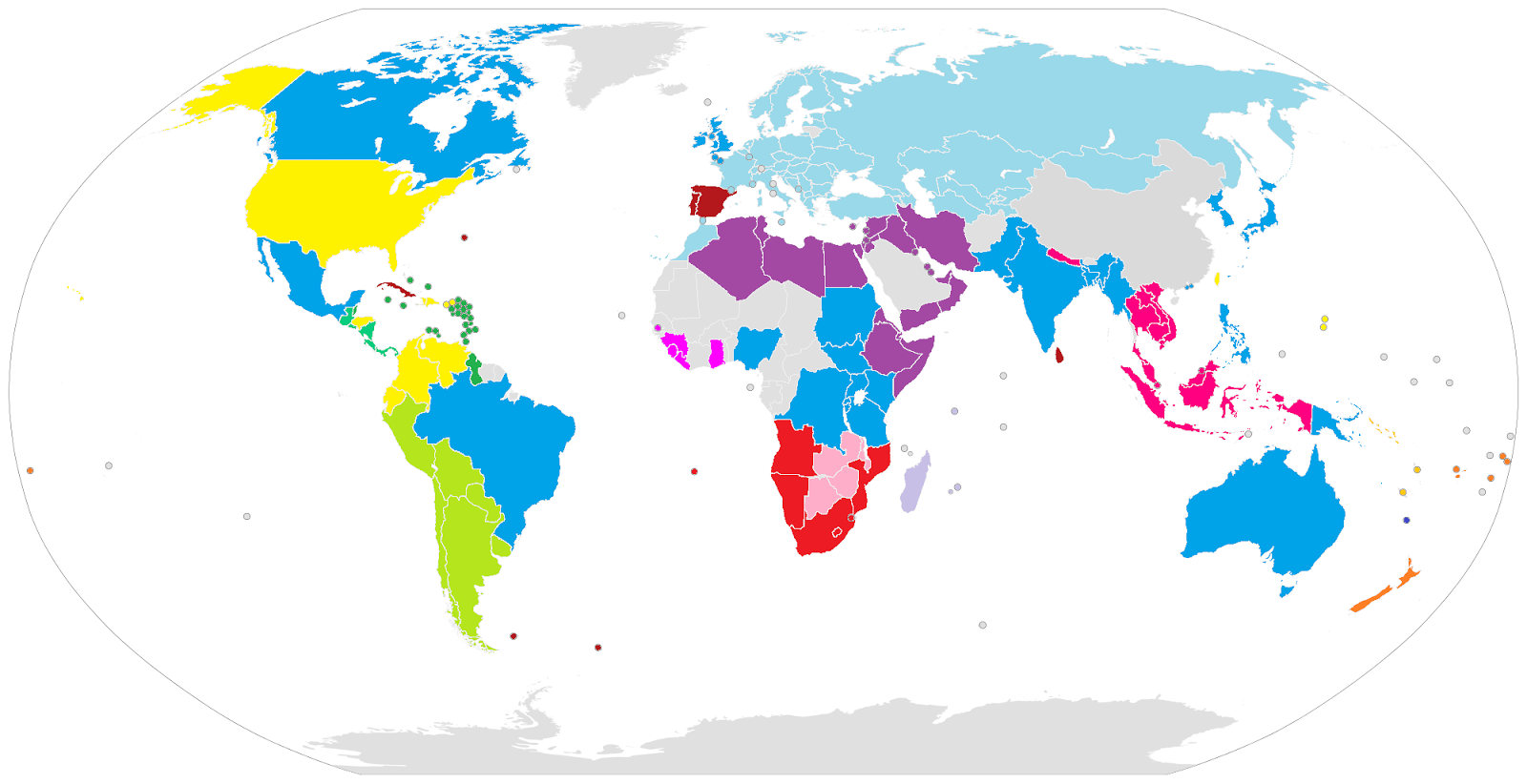
9. A global context of belonging. The Episcopal Church is a member of the Anglican Communion, a worldwide fellowship of 38 national and regional provinces in communion with the Archbishop of Canterbury. The Anglican Communion is the third largest body of Christians in the world, after the Roman Catholic Church and the Eastern Orthodox churches. It consists of about 80 million people in 165 countries. Although sharing a common heritage in the Church of England and the Book of Common Prayer, each of these national churches lives out its Anglican identity differently, according to its unique cultural and social context. Some Anglican provinces are more catholic in their worship, while others are more evangelical or charismatic. Some are more socially and theologically liberal, while others are more conservative. The Episcopal Church engages with these other Anglican provinces through a variety of organizations and partnerships, including Episcopal Relief and Development, which offers support during natural disasters, epidemics, and other emergencies, as well as providing resources for long-term development.

10. An anchor in a turbulent world. Recent research from the Pew Research Center for Religion and Public Life and other thinktanks have demonstrated a resurgence of interest in traditional and liturgical forms of Christianity, such as the Episcopal Church. In a world when everything else is constantly changing, postmodern people are learning to value the spiritual grounding that the ancient traditions of Christianity have to offer.

This list is, of course, neither objective nor exhaustive; it is only my perspective on what the Episcopal Church and Anglicanism contribute to the spiritual life. Are there other reasons? Please respond back with your own suggestions and perspectives and add to this discussion.

Abundant blessings,
Fr. Ethan+