Showing posts with label Hooker. Show all posts

Tuesday, September 29, 2015

An Apology of Anglican Catholicity

The new Chicago Chapter of the Society of Catholic Priests
While Philadelphia (and the world) waited with great anticipation for Pope Francis to open the World Meeting of Families last Saturday, my friends and I were preparing for an event of our own here in Chicago. After two and a half years of discussion, discernment, and preparation, we gathered at Grace Episcopal Church in the city's South Loop for a mass to inaugurate the Chicago Chapter of the Society of Catholic Priests. It did not involve barricading downtown streets or ticker-tape parades. None of us drove through adoring crowds in a Pope-mobile. Just bread and wine, hymns and holy smoke, and champagne at the end.

The frenzy of activity and interest in the Pope's visit demonstrates the power that the notion of
Pope Francis greets admirers in Philadelphia
catholicity still has over people generally, and Anglicans, specifically. My Facebook feed filled with commentaries about Francis's statement on same-sex marriage and the ordination of women, the moral example he was setting by snubbing an invitation from congressional leaders to eat with the homeless, and even how his presence would likely influence the upcoming presidential election. In a way, it makes me sad that many Anglicans feel they have to piggyback onto the Roman bandwagon to satisfy their fascination for and experience of the universal Church.

It speaks to the fact that Anglicanism, including the Episcopal Church, is timid about claiming its catholicity. When we do it, it's in a half-hearted and qualified way, as if we're either embarrassed or not quite convinced of it. Maybe we feel insecure that we're so much smaller or that we're a more recent creation. Like the rural cousin that arrives to the fancy gala in her simple homespun dress, we feel we just don't measure up. After all, it's hard to compete with the sheer scale of the Roman Church's presence and of Pope Francis's popularity. But if Francis has taught us anything, it's that the Church is not about riches or pomp or who's got the tallest mitre.

John Jewel
I think about the many great theologians in our tradition that have crafted sophisticated apologies of the Church of England, how they too wrestled with the concept of catholicity. Whether it was an attempt to recapture the purity of the ancient Church, reconnect with the roots of pre-Reformation Sarum, or enter into a more expansive understanding of catholicity, they all had to make sense of the unique place of the ecclesia anglicana in the universal Church. Jewel and Hooker, Newman and Keble, Ramsey and Williams have thought and debated in just the same way we are thinking and debating within the Society of Catholic Priests. As I looked around Grace's sanctuary on Saturday morning, I remarked on the diversity of our members' priestly ministry, the variety of contexts in which we serve at the altar. We are urban and suburban, in mostly white congregations and mostly black, in small parishes and large, in broad churches and Anglo-Catholic churches, in affluent communities and in poor communities. If this doesn't represent the universality of the Church, then I don't know what does.

Abundant blessings,
Fr. Ethan+

Monday, September 7, 2015

Why Episcopal Identity Matters: Part II

Last week's blog offered five reasons why Episcopal identity and practice are still relevant in a pluralistic, post-denominational, and postmodern society. This week, I offer the final five on my list.

St. Augustine of Canterbury
6. A rich theological heritage. The Book of Common Prayer provides a basic framework for Episcopal belief and practice, but Anglicanism boasts a much richer corpus of theological resources. Anglican thought traces its origins back beyond the Reformation to the era of Celtic Christianity and St. Augustine's mission to the English in the late 6th century. The Anglican heritage claims medieval greats, such as the Venerable Bede and Julian of Norwich. It is grounded in the work of major Reformation theologians like Thomas Cranmer and Richard Hooker and the sublime poetry of John Donne and George Herbert, both priests in the Church of England. Anglicanism nurtured the Oxford Fathers who led the Catholic Revival of the mid-19th century, which revitalized Anglican liturgy, hymnody, and architecture. It shaped the Christian Socialism movement later in the century. In this generation, Anglicanism has produced first-rate intellectuals and academicians, such Sarah Coakley, Katherine Tanner, Rowan Williams, and of course, Desmond Tutu.

7. Contemplation and mysticism. Anglicans are not just thinking folk. They are also people open to the deep, internal experience of God. The contemplative life ranges from walking the labyrinth or participating in a centering prayer group to joining one of the professed religious communities of the Anglican Communion, such as the Society of St. John the Evangelist, the Order of Julian of Norwich, or the Brotherhood of St. Gregory.

Chanting the Exsultet at the Easter Vigil.
8. Beautiful music. One of Anglicanism's principal contributions to Christianity is a strong musical repertoire. The Anglican tradition excels in both choral and congregational singing. At an Easter Vigil, you might hear a deacon chant the Exsultet, one of the most ancient and revered pieces of sacred music, followed by a choir performing Anglican chant and plainsong. During the week, you might participate in a Taize service or Choral Evensong with a contemporary setting of the Magnificat. On an average Sunday, you will likely join a congregation in singing hymns written by legendary figures, such as Isaac Watts, John and Charles Wesley, and John Mason Neale.


Map of the Anglican Communion.
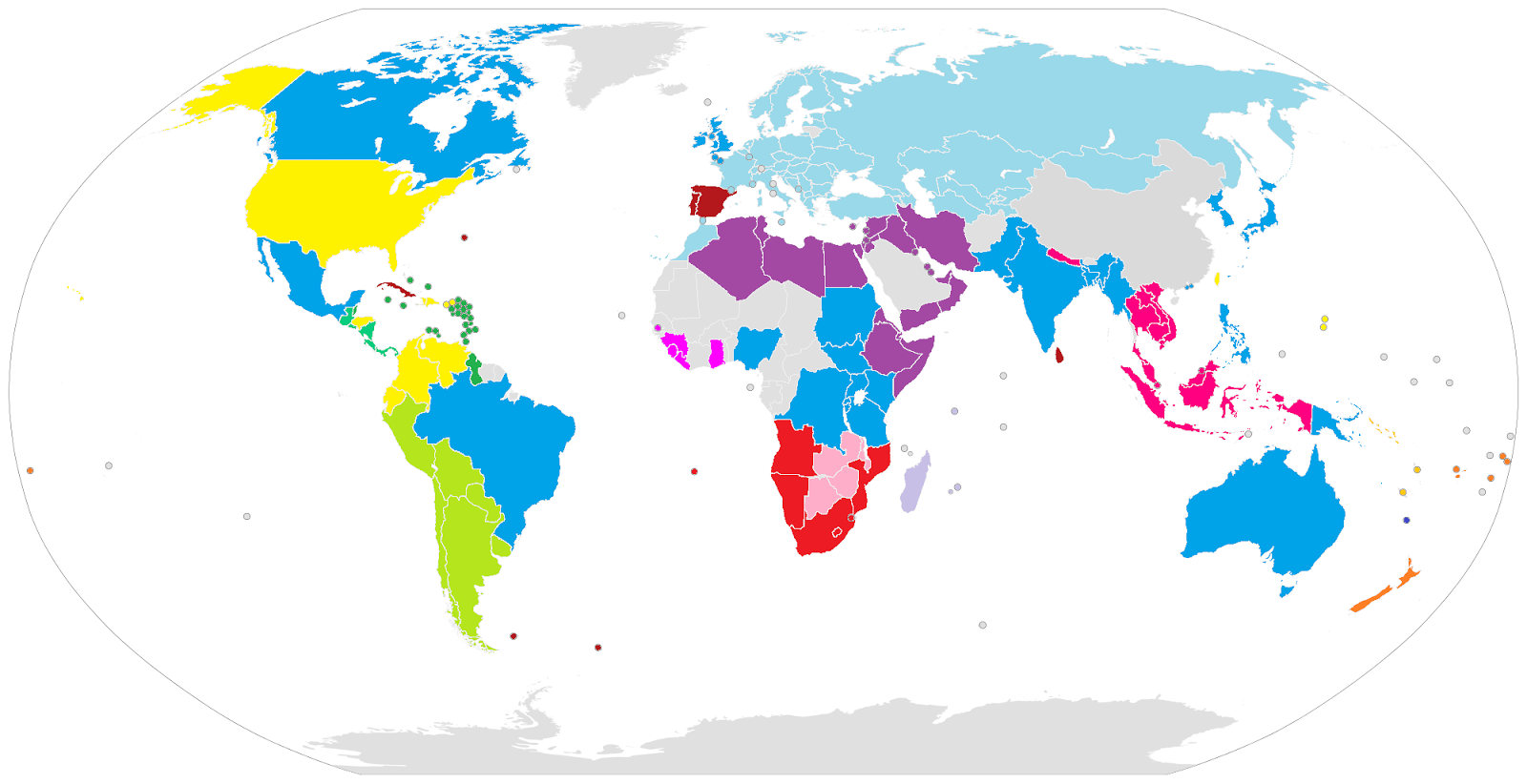
9. A global context of belonging. The Episcopal Church is a member of the Anglican Communion, a worldwide fellowship of 38 national and regional provinces in communion with the Archbishop of Canterbury. The Anglican Communion is the third largest body of Christians in the world, after the Roman Catholic Church and the Eastern Orthodox churches. It consists of about 80 million people in 165 countries. Although sharing a common heritage in the Church of England and the Book of Common Prayer, each of these national churches lives out its Anglican identity differently, according to its unique cultural and social context. Some Anglican provinces are more catholic in their worship, while others are more evangelical or charismatic. Some are more socially and theologically liberal, while others are more conservative. The Episcopal Church engages with these other Anglican provinces through a variety of organizations and partnerships, including Episcopal Relief and Development, which offers support during natural disasters, epidemics, and other emergencies, as well as providing resources for long-term development.

10. An anchor in a turbulent world. Recent research from the Pew Research Center for Religion and Public Life and other thinktanks have demonstrated a resurgence of interest in traditional and liturgical forms of Christianity, such as the Episcopal Church. In a world when everything else is constantly changing, postmodern people are learning to value the spiritual grounding that the ancient traditions of Christianity have to offer.

This list is, of course, neither objective nor exhaustive; it is only my perspective on what the Episcopal Church and Anglicanism contribute to the spiritual life. Are there other reasons? Please respond back with your own suggestions and perspectives and add to this discussion.

Abundant blessings,
Fr. Ethan+