Tuesday, October 27, 2015

On Church Buildings

I currently serve at the Diocese of Chicago's third oldest parish, which was founded in 1851. If you were to pass in front of the building, you might not think it was a church at all, and certainly not one of such great longevity. Grace is now at its sixth location in a converted commercial building in the South Loop's Printer's Row. It houses not only an Episcopal congregation on Sunday, but a number of not-for-profit organizations, a Lutheran satellite campus, a Korean congregation, the South Loop campus ministry (Lutheran/Episcopal), a weekly community breakfast for 200 homeless men and women, yoga, Alcoholics Anonymous, and a number of other activities that vary from week to week. The building is almost always FULL.

For many congregations, though, their buildings are perceived as a burden, rather than an asset. After several years on the diocesan Congregations Commission, I came to appreciate how pivotal a building can be to a congregation's survival and vitality. Many are faced with huge obstacles posed by deferred maintenance: a roof that needs to be replaced, a parking lot that needs to be resurfaced, tuckpointing to preserve a crumbling facade, foundation or other work to stem flooding, electrical upgrades, plumbing repairs, a new boiler or water heater. The list goes on and on. In every congregation where I have been a leader, both as a layperson and as a priest, there have been major physical plant challenges. As a result, some have argued that we need to get out of our expensive Gothic or Romanesque buildings and relocate to spaces that are more economical and better suited to the kind of work our congregations want to do. They're bleeding us dry, people complain.

A community meeting on the 1st floor meeting space.
While that may be true in many cases, the larger question for me is: what does your building make possible? There is no doubt that Grace, a parish that numbers a steady 65 on Sundays, is able to do disproportionately more than other congregations its size because of its extraordinary building. I know you'll indulge me and allow me to brag a little that the parish has a reach and a reputation in the community that most congregations would envy. But even a contemporary building ideally suited to ministry in the wider community has a variety of associated costs. Tenants provide a steady revenue stream, but they also generate costs. Additional wear and tear on the building from increased usage; staffing to provide building security, custodial services, and setup/break-down of the various meeting spaces; infrastructure repairs and upgrades to the physical plant; and legal fees incurred to negotiate contracts and occupancy agreements can also be part of the equation. There is no doubt in my mind that these expenses are worthwhile; and the relationships the parish builds with its community and ministry partners are inestimable. But they can add up to a sizable fiscal note. So, a parish needs to be informed about what's involved and smart about managing it all.

Saturday's community breakfast.
There is no one-size-fits-all solution to the challenges posed by church buildings. Moving out of an historic Gothic building might be more cost-effective, but relocating to a converted printing warehouse might not support the ethos and aesthetic of the traditional liturgy that is central to a particular parish's identity and reputation. On the other hand, it might be just the thing that allows that parish to grow into a more vibrant and stable version of itself. It might encourage the parish to think of itself in new ways, as its members discover what the new building makes possible. In either case, the parish needs to act strategically to ensure that it has the right leadership, resources, and infrastructure to support its mission. As a priest that spends about half of his time doing administration and management, I value the experience and skills sets I developed as a not-for-profit executive. I couldn't do my job without them. I am aware, however, that if we imagine new ways of being church, including the types of buildings we use, seminaries will have to train clergy differently and congregations will need to recruit particular types of expertise to fill leadership roles on vestries, building committees, and other bodies. Church buildings can be a invaluable asset if we honestly evaluate what they make possible, and what they don't, and what they need from us to make them work.

Blessings,
Fr. Ethan+

Wednesday, October 14, 2015

Preserving the Nicene Creed

I am just back in the parish after having been on the road for a solid week, first at the Society of Catholic Priests annual meeting in Denver, and then at the Diocese of Chicago's clergy conference. Both events provided a stirring experience of the universality of the Church, the fact that we live out the Christian faith in our own distinct contexts, animated by different cultural traditions, pieties, and musical styles. And our theologies are often varied, as well. We discussed, debated, and even argued about what constitutes solid Anglican teaching. Are hospitality and justice, for example, sufficient reasons to change, say, the Church's official position on the communion of the unbaptized? Do they provide an adequate justification for revising the marriage rite in the Book of Common Prayer to encompass same-sex couples, or is more theological work needed?  And then, there's the Nicene Creed, another topic on which much digital ink has been spilled this week.

The core issue of the Nicene Creed is its status in a revised Prayer Book. Should it be included, and if so, why? In what form should it be retained? Should it remain a normative and integral part of the primary service on Sundays? Regardless of our different ministry contexts, the Nicene and Apostles' Creeds serve as a focal point of unity in the Anglican Communion. It will probably not surprise you to hear that people of good conscience have expressed a variety of views on this subject. And I am among them. So, here are my top five concerns about the Nicene Creed:

1. Restore the original Niceno-Constantinopolitan Creed. My beloved read the words Niceno-Constantinopolitan over my shoulder and said it sounded like an exotic ice cream medley. I laughed and admitted that this blog entry might seem a bit esoteric and pedantic to some, so if it is, my apologies. But, in all seriousness, I think the Nicene Creed is a topic worthy of thoughtful debate. As "Crusty Old Dean," Tom Ferguson, has colorfully argued on his own blog, the Episcopal Church should decisively get rid of the filioque clause in the Nicene Creed that claims that the Holy Spirit proceeds from the Father AND the Son. For one, the filioque muddles and problematizes orthodox Trinitarian theology. Secondly, it was a unilateral decision to counter the Arianism of the Teutonic Christians, who viewed Jesus as inferior to the Father. Originally added at the Council of Toledo in 589 and later enforced by Charlemagne, the reason it was contrived no longer exists. To revert to the original Creed as formulated at the Ecumenical Councils of Nicaea in 325 and Constantinople in 381 would more faithfully recapture the sensus fidelium of the early Church that we embrace and pass on to future generations.

Archbishop Michael Ramsey
2. Pass the torch. Each generation of the faithful is charged with passing on the core tenets of the faith to the next. Archbishop of Canterbury, Michael Ramsey, wrote on the first page of The Anglican Spirit,
"I want to talk about some of the main enduring characteristics of Anglican tradition, the way in which the Anglican Church has in its life and teaching, theology and sacraments, given over that divine paradosis--which is the Greek word for something that has been 'handed over' or 'passed on.' For when we Christians speak of tradition, we mean the experience of the Christian community lying authentically within that which God through Christ has handed over for the revelation of himself and the salvation of men and women everywhere" (Ramsey, 1).
So, for example, what is the point of the catechumenate if we fail to hand over the core beliefs of Christianity as preserved in the Nicene Creed. In the current version of the catechumenate in the Book of Occasional Services, the direction is given that "it is appropriate that the Apostles' (or Nicene Creed) be given to the Candidates for Baptism on the Third Sunday in Lent and the Lord's Prayer be given to them on the Fifth Sunday in Lent." If we dispense with the Nicene Creed, then exactly what faith are we passing on? What statement of belief are they receiving?

3. Prayer Book revision. This leads me to Prayer Book revision. Dr. Derek Olsen has addressed a number of concerns that have arisen from a recent statement on Prayer Book revision from his colleague on the Standing Commission on Liturgy and Music, The Rev. Dr. Ruth Meyers. Dr. Meyers described the Nicene Creed as a stumbling block for many, and proposed that it not remain a standard feature of Sunday worship. This suggestion ignited the blogosphere and occasioned a flurry of responses, such as in the Living Church and on the Smoking Thurible blog. The Nicene Creed, I would argue, forms part of the esse of the Church, and is therefore not dispensable. Olsen argues, moreover, that Meyer's proposal is symptomatic of a cultural shift away from orthodox Christianity toward a variety of heresies aligned with Moral Therapeutic Deism. C. S. Lewis makes the point in Letters to Malcolm, for example, that "first, [common prayer] keeps me in touch with 'sound doctrine.' Left to oneself, one could easily slide away from 'the faith once given' into a phantom called 'my religion.' [...] By the way, that's another thing to be avoided in a revised Prayer Book. 'Contemporary problems' may claim an undue share. And the more 'up to date' the book is, the sooner it will be dated" (Lewis, 12). If you don't believe Lewis, take a look at Eucharistic Prayer C (referred to by people of diverse churchmanship as the "Star Wars Prayer") in the 1979 Book of Common Prayer, and tell me it doesn't seem dated, despite its often lovely, lyrical imagery. As a guy who grew up in the 1970s, it does have a bit of a ''groovy, man" vibe to me.

4. Foster ecumenism. The current version of the Creed with the filioque is a serious obstacle to ecumenical work. Lest we forget, the filioque was one of the primary disagreements that led to the Great Schism between the Western and Eastern Churches in 1054. The Anglican Oriental Orthodox International Commission met last week in Wales, during which the Anglican representatives agreed to remove the filioque and move the two communions closer together. Dean Ferguson clarifies that the removal of the filioque is not meant simply to placate Orthodox Christians, who have long complained about its use among Roman Catholics and others (like us), but because it's a theological aberration that needs to be remedied. More generally, the Nicene Creed is not just an historical artifact. It remains the second component of the Chicago-Lambeth Quadrilateral of 1886/8 shaped by William Reed Huntingdon as the basis for Anglican ecumenical work: "The Apostles' Creed, as the Baptismal Symbol; and the Nicene Creed, as the sufficient statement of the Christian faith" (BCP, 877). I understand that this document, like the Articles of Religion (Thirty-Nine Articles) is housed in the "Historic Documents" section of the Prayer Book, but unless I've been misinformed, the historic Creeds, along with the Holy Scriptures, the dominical sacraments, and the episcopate, are still foundational principles for our ecumenical efforts.

Niceno-Constantinopolitan Creed
5. Creeds are always necessary but not sufficient. During the Diocese of Chicago's clergy conference, the Rev. Dr. Mark McIntosh, Professor of Christian Spirituality at Loyola University Chicago, pointed out that "creeds are always necessary, but not sufficient." I absolutely agree with this statement--at least inasmuch as the Nicene Creed does not speak explicitly on every topic related to God or the Christian experience. There is much that we affirm about God and our lives as Christians that are not mentioned by the historic Creeds, and so I have at times complemented the Nicene Creed on Sunday morning with other affirmations as a way to encourage people to be reflective. The historic Creeds are the starting point of a spiritual journey. The Chicago-Lambeth Quadrilateral defines the Nicene Creed as the sufficient statement of the Christian faith, which I understand to mean that it supplies the essential foundation without being exhaustive like a multi-tomed systematic theology. But it does something else. In being the foundation, the Creed drives our seeking, leading us to be ever more curious, ever more passionate for God.

I realize that for many people reciting the Nicene Creed is difficult, containing certain theological propositions to which they cannot assent. It's tough for me, too. So, I get Dr. Meyer's point. But reciting the Creed is about more than agreeing intellectually with this or that statement. It's about affirming one's belonging to a heritage of faith and practice over many generations and seeking to live into the unfathomable mystery of God that the Nicene Creed expresses. In this way, the Church would not be the Church without it.

Tuesday, October 6, 2015

Ritual Notes

I have been thinking a lot about ritual lately, both as a priest in a new parish and in light of the upcoming annual conference of the Society of Catholic Priests, which begins this week in Denver. As usual, liturgy will be a primary component of the conference. We will come together from our diverse parishes, each with its unique ritual customs, and do our best not to throw each other off or step on each others' feet.

In seminary, I was taught that even congregations and denominations that do not consider themselves "liturgical churches" still have patterns and customs for worship that over time become normative. They are in their own way rituals, or performance. Worship is performance, not in the sense of entertainment, but rather as the way a worshiping community enacts the theological, relational, and cultural values that are foundational to its identity. From week to week, we see a congregation perform an established repertoire of acts, gestures, and statements that say, "this is who we are."

Growing up as a young Jewish kid at Congregation Kol Ami, I came to know and anticipate every core gesture and to blend in with the rhythm and pacing of every practiced word. But I also noticed the places in the service where there was untidiness, even dissonance. The fact that Judith Sobel sang theAlenu an octave higher than everyone else--and not always on key--and that some people bent their knees and bowed at the designated place in that prayer, and some didn't, were also part of the congregation's identity. Every congregation, no matter how uniform it may look from the outside, is diverse: diverse pieties, spiritualities, theologies, and ritual sensibilities. In Episcopal congregations, for example, at the invocation of the Holy Trinity, some people will make the sign of the cross, or bow, or do nothing at all. In some parishes, certain people will kneel during the Eucharistic Prayer, while others will stand. Some adore "bells and smells," while others would prefer it simple and unadorned. And you may find all of this diversity within one congregation.


From the priest's perspective--at least, this priest's perspective--the challenge is to acknowledge and respect this diversity. In every service, the priest hopes that each person will find something that will spirituality nourish him or her. Perhaps it will be the sermon, or the hymns, or the language we use to talk about God. The ritual actions likewise may resonate with one person, and not another, for theological, aesthetic or cultural reasons. And, perhaps unexpectedly, the congregation's diversity also includes the priest. Like the congregation, the priest is a worshiper who brings his or her theology, relationship with God, personality, and ritual sensibilities to the altar. Anglicanism has always striven for unity without uniformity, and I would add, communion without conformity. Ritual should, therefore, make a generous space for "a bit of me" and "a bit of you." At its best, worship will enable both priest and every member of the congregation to bring something of their authentic selves to their shared encounter with God. 

Abundant blessings,
Fr. Ethan+


Tuesday, September 29, 2015

An Apology of Anglican Catholicity

The new Chicago Chapter of the Society of Catholic Priests
While Philadelphia (and the world) waited with great anticipation for Pope Francis to open the World Meeting of Families last Saturday, my friends and I were preparing for an event of our own here in Chicago. After two and a half years of discussion, discernment, and preparation, we gathered at Grace Episcopal Church in the city's South Loop for a mass to inaugurate the Chicago Chapter of the Society of Catholic Priests. It did not involve barricading downtown streets or ticker-tape parades. None of us drove through adoring crowds in a Pope-mobile. Just bread and wine, hymns and holy smoke, and champagne at the end.

The frenzy of activity and interest in the Pope's visit demonstrates the power that the notion of
Pope Francis greets admirers in Philadelphia
catholicity still has over people generally, and Anglicans, specifically. My Facebook feed filled with commentaries about Francis's statement on same-sex marriage and the ordination of women, the moral example he was setting by snubbing an invitation from congressional leaders to eat with the homeless, and even how his presence would likely influence the upcoming presidential election. In a way, it makes me sad that many Anglicans feel they have to piggyback onto the Roman bandwagon to satisfy their fascination for and experience of the universal Church.

It speaks to the fact that Anglicanism, including the Episcopal Church, is timid about claiming its catholicity. When we do it, it's in a half-hearted and qualified way, as if we're either embarrassed or not quite convinced of it. Maybe we feel insecure that we're so much smaller or that we're a more recent creation. Like the rural cousin that arrives to the fancy gala in her simple homespun dress, we feel we just don't measure up. After all, it's hard to compete with the sheer scale of the Roman Church's presence and of Pope Francis's popularity. But if Francis has taught us anything, it's that the Church is not about riches or pomp or who's got the tallest mitre.

John Jewel
I think about the many great theologians in our tradition that have crafted sophisticated apologies of the Church of England, how they too wrestled with the concept of catholicity. Whether it was an attempt to recapture the purity of the ancient Church, reconnect with the roots of pre-Reformation Sarum, or enter into a more expansive understanding of catholicity, they all had to make sense of the unique place of the ecclesia anglicana in the universal Church. Jewel and Hooker, Newman and Keble, Ramsey and Williams have thought and debated in just the same way we are thinking and debating within the Society of Catholic Priests. As I looked around Grace's sanctuary on Saturday morning, I remarked on the diversity of our members' priestly ministry, the variety of contexts in which we serve at the altar. We are urban and suburban, in mostly white congregations and mostly black, in small parishes and large, in broad churches and Anglo-Catholic churches, in affluent communities and in poor communities. If this doesn't represent the universality of the Church, then I don't know what does.

Abundant blessings,
Fr. Ethan+

Monday, September 21, 2015

#TractSwarm Four: The Heart of Anglican Catholicity

Justin Welby, 105th Abp of Canterbury
The Archbishop of Canterbury announced a proposal last week to deal with the schism within Anglicanism by dismantling the Anglican Communion and replacing it with a looser network of provinces connected to the See of Canterbury. The big change would be that, while these provinces would remain in communion with Canterbury, they would not necessarily remain in communion with each other. I considered this distressing news in light of the most recent Society of Catholic Priests TractSwarm on the heart of catholicity for the 21st century Anglican. To what extent can Anglicanism claim catholicity when it proposes to pursue schism for short-term relief, rather than to hold out for long-term unity?

It is probably clear from the way I framed this question that I do not think this is a wise approach to our current difficulties. But it's not because I disagree with the Lord Archbishop of Canterbury about the impossibility of bringing progressives and conservatives to consensus on human sexuality, the consecration of women bishops, or other controversial issues. It's not because I have a solution he and his predecessors haven't yet thought of. And it's not because I don't think folks just haven't tried hard enough. There is a deeper reason. It is because the decision we make now has repercussions for generations that come after us. We cannot simply make decisions for ourselves, but must take the long view of the implications of walking away from each other. Diplomacy and patience over time--perhaps even several lifetimes--is the only answer.

Michael Cerularius
Imagine if the rigid and hotheaded Papal Legate, Humbert of Silva Candida, and the Patriarch of Constantinople, Michael Cerularius, hadn't succumbed to anger and namecalling and anathematized each other in 1054. Might the Great Schism have happened anyway? Perhaps. But perhaps if everyone had known how irreversible and devastating this exchange of tempers would be for all of Christendom, they would have taken one more deep breath, gone away to cool off, or just agreed to disagree for the time being. Or maybe the Pope would have sent a more irenic and levelheaded representative than Humbert to Constantinople to speak on his behalf. Once the one, holy, catholic and apostolic church was shattered, like Humpty Dumpty, there was no putting the pieces back together again.

Later in the week, after the Welby proposal had aired, I was re-reading a passage in William Sydnor's  The Prayer Book Through the Ages, about the first General Convention of the Episcopal Church in 1789, where there were serious divisions over the draft of the first American Book of Common Prayer and the consecration of Samuel Seabury. Sydnor observes, 

In that company the tensions were great. In addition, those in positions of power were difficult to deal with, and some of them could not get along with certain others. The possibility that this band of apparent irreconcilables might reach any consensus looked dim. But the seemingly impossible was brought about by the patience and statesmanship of those in key positions, principally William White and William Smith. Moreover, it was accomplished without breaking off communion with the Church of England (Sydnor, 61, emphasis mine).

Bishop William White
There are consequences of both giving in to impatience and frustration and of practicing patience and diplomacy. It is heartening to remember how the efforts of the Episcopal Church's first Presiding Bishop, William White--not to mention many others--enabled the American Church to be born and to remain in communion with the See of Canterbury. The heart of Anglican Catholicism for me, then, is the recognition that we need each other when we don't agree with each other, or even when we dislike each other. But instead of slapping a bull of excommunication on the high altar of Hagia Sophia like Humbert, we should accept the fact that unity is out of reach for the present, and yet not walk away. We should realize that unity is not an entitlement, something that should come easily, but something that is hard-won after generations of labor and faithfulness.

In the early Church, schism was one of the worst sins a Christian could commit, and it's not hard to see why, the effects are devastating to the Body of Christ. In the polemics and politics of the Anglican Communion, we should set aside our expectations of immediate gratification and take the long view, the one that Jesus offered us in the Sermon on the Mount: "Blessed are you when people revile you and persecute you and utter all kinds of evil against you falsely on my account. Rejoice and be glad, for your reward is great in heaven, for in the same way they persecuted the prophets who were before you." Our time is not God's time. We cannot predict when the unity of the Church will become apparent and we will be able to enjoy the fruits of that unity.

Abundant Blessings,
Fr. Ethan+

Monday, September 7, 2015

Why Episcopal Identity Matters: Part II

Last week's blog offered five reasons why Episcopal identity and practice are still relevant in a pluralistic, post-denominational, and postmodern society. This week, I offer the final five on my list.

St. Augustine of Canterbury
6. A rich theological heritage. The Book of Common Prayer provides a basic framework for Episcopal belief and practice, but Anglicanism boasts a much richer corpus of theological resources. Anglican thought traces its origins back beyond the Reformation to the era of Celtic Christianity and St. Augustine's mission to the English in the late 6th century. The Anglican heritage claims medieval greats, such as the Venerable Bede and Julian of Norwich. It is grounded in the work of major Reformation theologians like Thomas Cranmer and Richard Hooker and the sublime poetry of John Donne and George Herbert, both priests in the Church of England. Anglicanism nurtured the Oxford Fathers who led the Catholic Revival of the mid-19th century, which revitalized Anglican liturgy, hymnody, and architecture. It shaped the Christian Socialism movement later in the century. In this generation, Anglicanism has produced first-rate intellectuals and academicians, such Sarah Coakley, Katherine Tanner, Rowan Williams, and of course, Desmond Tutu.

7. Contemplation and mysticism. Anglicans are not just thinking folk. They are also people open to the deep, internal experience of God. The contemplative life ranges from walking the labyrinth or participating in a centering prayer group to joining one of the professed religious communities of the Anglican Communion, such as the Society of St. John the Evangelist, the Order of Julian of Norwich, or the Brotherhood of St. Gregory.

Chanting the Exsultet at the Easter Vigil.
8. Beautiful music. One of Anglicanism's principal contributions to Christianity is a strong musical repertoire. The Anglican tradition excels in both choral and congregational singing. At an Easter Vigil, you might hear a deacon chant the Exsultet, one of the most ancient and revered pieces of sacred music, followed by a choir performing Anglican chant and plainsong. During the week, you might participate in a Taize service or Choral Evensong with a contemporary setting of the Magnificat. On an average Sunday, you will likely join a congregation in singing hymns written by legendary figures, such as Isaac Watts, John and Charles Wesley, and John Mason Neale.


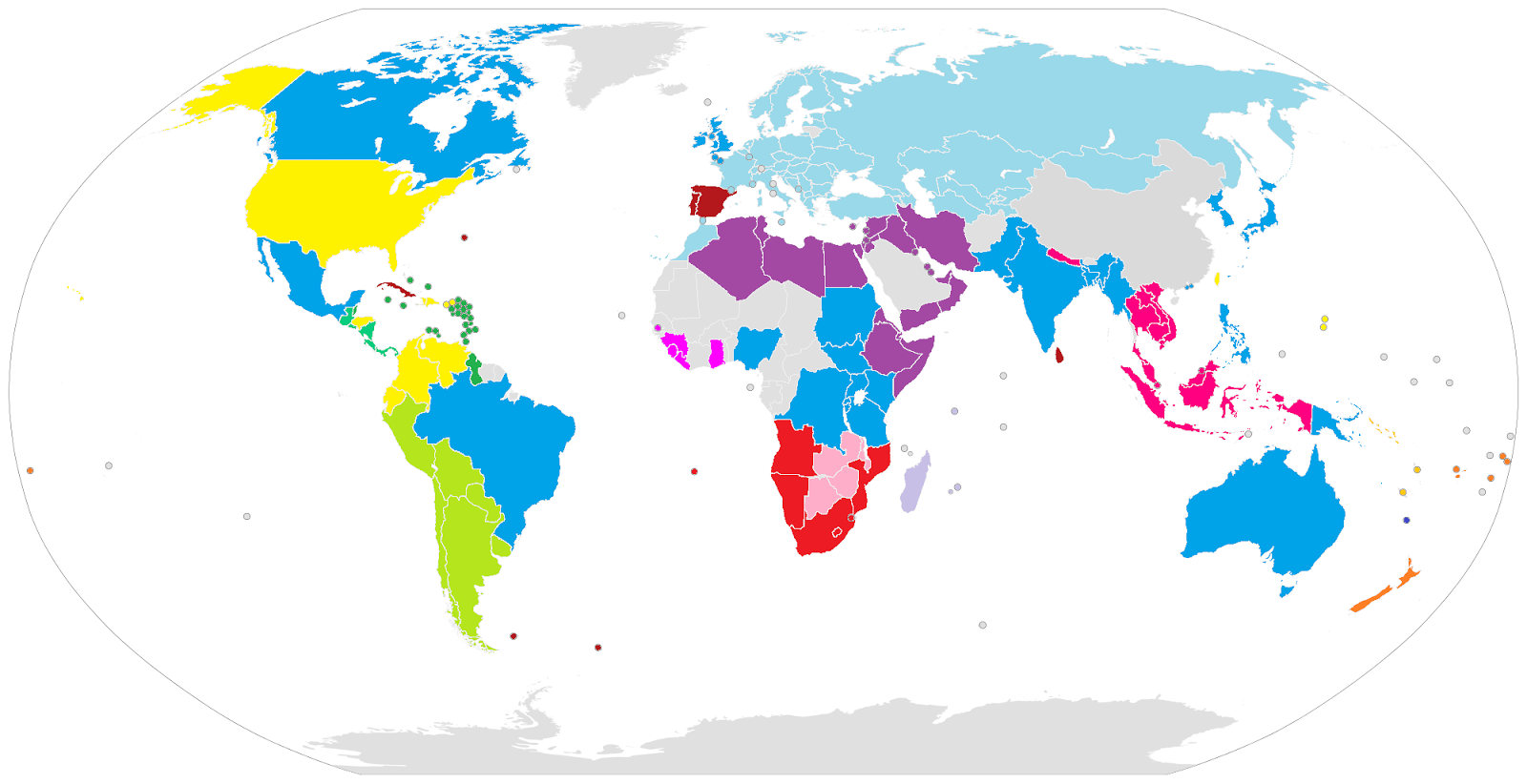
Map of the Anglican Communion.
9. A global context of belonging. The Episcopal Church is a member of the Anglican Communion, a worldwide fellowship of 38 national and regional provinces in communion with the Archbishop of Canterbury. The Anglican Communion is the third largest body of Christians in the world, after the Roman Catholic Church and the Eastern Orthodox churches. It consists of about 80 million people in 165 countries. Although sharing a common heritage in the Church of England and the Book of Common Prayer, each of these national churches lives out its Anglican identity differently, according to its unique cultural and social context. Some Anglican provinces are more catholic in their worship, while others are more evangelical or charismatic. Some are more socially and theologically liberal, while others are more conservative. The Episcopal Church engages with these other Anglican provinces through a variety of organizations and partnerships, including Episcopal Relief and Development, which offers support during natural disasters, epidemics, and other emergencies, as well as providing resources for long-term development.

10. An anchor in a turbulent world. Recent research from the Pew Research Center for Religion and Public Life and other thinktanks have demonstrated a resurgence of interest in traditional and liturgical forms of Christianity, such as the Episcopal Church. In a world when everything else is constantly changing, postmodern people are learning to value the spiritual grounding that the ancient traditions of Christianity have to offer.

This list is, of course, neither objective nor exhaustive; it is only my perspective on what the Episcopal Church and Anglicanism contribute to the spiritual life. Are there other reasons? Please respond back with your own suggestions and perspectives and add to this discussion.

Abundant blessings,
Fr. Ethan+

Monday, August 31, 2015

Why Episcopal Identity Still Matters: Part I

This Sunday, I will conduct the first in a series of four classes on the Episcopal Church, what are often known as "inquirers classes." Although this is standard practice in Episcopal congregations, many might ask if this is still relevant. In a pluralistic, post-denominational society, does it matter whether we are Episcopal, Lutheran, Methodist, or Presbyterian? Haven't we evolved past these distinctions?

The answer is both yes and no. I firmly believe that ecumenical and interfaith collaboration is vital to the future of the Church, but I also feel very strongly that denominational identity is still worth building and nurturing. This belief is not the result of some abstract, intellectual exercise, but rather, the experience of my own formation as an Episcopalian. Below are five reasons why I think Episcopal identity still matters.

In Washington National Cathedral.
1. Common prayer. At the heart of the Episcopal identity is the notion of common prayer. As the old Anglican maxim goes, lex orandi, lex credendi, the way we pray shapes what we believe. Although many congregations now pray from Sunday bulletins, rather than pew copies of the Book of Common Prayer, worship is still based largely on the forms and rubrics of the Prayer Book. I can't count the number of times I have been in an unfamiliar city for work or vacation and have wandered into the local Episcopal parish for a Sunday Eucharist or weekday Evening Prayer. Whether it is in a country church, like the one my great-great-great-grandmother founded, or Washington National Cathedral, the patterns of worship remain familiar and consistent. In a strange environment, Episcopal worship has offered a locus of stability and belonging that I have greatly valued in a very fluid and tumultuous world.

2. An appeal to intellect, emotion, and the senses. As one elderly parishioner once said to me, "the Episcopal Church is the thinking man's church." The Anglican tradition has relied heavily on deep theological thinking, informed by Scripture, tradition, and human reason. However, the Episcopal Church has also encouraged people to peer beyond theological inquiry and debate to embrace experiential ways of knowing that engage the emotions and the senses. There is something deeply transformative about sitting in deep silence with others, walking the labyrinth, offering up prayers in great clouds of incense, or joining an entire congregation as they chant the Nicene Creed. Episcopal identity and worship engage the whole person.

Let my prayer be set forth in thy sight as incense.
3. Both ancient and modern. The Episcopal Church has been described as a creedal, rather than a confessional, church. This means that the Episcopal Church does not have a checklist of denominationally specific articles of faith to which members are expected to assent. Episcopalians ground themselves rather in the the Nicene and Apostles' Creeds, which articulate a heritage of faith and belief that goes back to the earliest days of the undivided Church. We may struggle to accept some of the content of these ancient creeds, but we recite them as a sign of our relationship with the generations of Christians that have come before us. But that is not all we are. We are also open to the new things the Holy Spirit has to teach us about what it means to be children of God and followers of Jesus in our own unique contexts. In the Episcopal Church, we value the tension between continuity and discontinuity, between tradition and new discoveries about God.

4. A democratic polity. The governance of the Episcopal Church was deeply influenced by the democratic, representative ethos of the United States, which was born in the same era. The Episcopal Church may be organized around the leadership of bishops, but these bishops are elected democratically by the clergy and lay leadership of each diocese.  At the national level, moreover, the Episcopal Church establishes official policy on a wide range of issues through discussion and shared decision-making that includes bishops and elected representatives of both the clergy and laity of each diocese.

Neighborhood peace vigil.
5. A social conscience. One of the reasons that I came to the Episcopal Church was its progressive stances on social justice issues, such as immigration policy, the ordination of women, and the inclusion of LGBTQ people. However, I have also respected that fact that the Episcopal Church is a very big tent, incorporating people who may not agree with me and supporting a diversity of convictions and outlooks: liberal and conservative, traditional and experimental, mystical and intellectual.

The attributes I have just described are not all unique to the Episcopal Church, but in the aggregate, they shape and define our shared identity as Episcopalians. In order for an individual or a congregation to understand who it is, it needs to be steeped in the larger tradition to which it belongs, to identify where there are shared connections, and whether there is divergence.  Next week: Part II.

Blessings,
Fr. Ethan+